
Sunday, September 4, 2016


Saturday, September 3, 2016

Friday, September 2, 2016
Justice is not Truly Blind
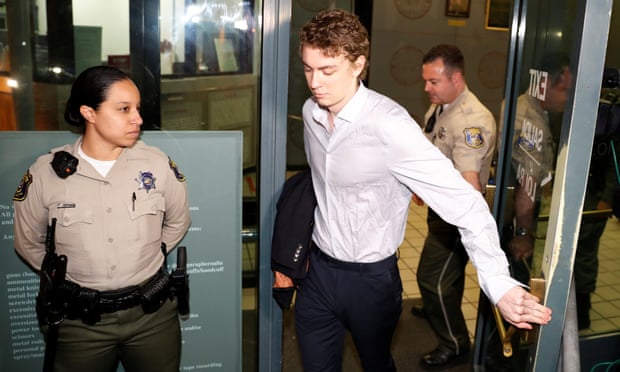 |
| Photograph: Stephen Lam, Reuters |
Brock Turner, the rapist from Stanford University, was released after serving three months of his six month sentence. Yes, I said he only had a six month sentence, even though he was found on top on an unconscious woman he'd dragged behind a dumpster. For the entire sordid story, go to BrockTurnerRapist.com.
What I want to talk about today is the concept that justice is blind. This didn't make sense to me as a kid because I always wondered how Justice could see the criminals if she was wearing a blindfold. But as I grew up I realized that Justice needs to be blind not in the physical sense of not seeing, but in the sense that everyone should get treated the same way regardless of gender, race, economic level, sexual identity, sexual preference,...
But Brock Turner, as well as the Ethan Couch, the "affluenza" teen who killed four people while drunk driving, show that Justice is not as blind as we'd like her to be. These young, white, heterosexual males got a pittance, a slight slap on the wrist, for committing horrible crimes. While people debate whether or not a cop has the right to shoot at young black men for lessor crimes, or even no crime at all, young white men get told "Naughty, naughty. Don't do that again."
This is the extent in which racism and wealth have corrupted our legal system, allowing white and/or rich people to follow different standards from the rest of society. Justice is not only not blind, but she now takes notes about you and your various statuses before contemplating what to do next.
The big question is - how are we going to fix this?


Thursday, September 1, 2016

Death, Disaster, and the American Psyche

Ten days from today, a majority of Americans will be remembering the horrific events of September 11, 2001. Media outlets will recap the events of the day in words and pictures; some might even provide a "where are they now?" segment to catch up with the people who survived.
I wonder how healthy this is for American society. I understand how people who experienced loss first hand might continue to mourn on Sept. 11. I have a friend who was talking on the phone to someone in the Twin Towers when the conversation suddenly ended; her friend didn't survive. I understand why my friend gets unhappy around this time every year. I even understand why most people in New York City might continue to mourn, considering the magnitude of the event.
But the rest of the country doesn't need to reopen the wounds every Sept. 11. Or on December 7 - Pearl Harbor Day.
American society seems to focus on disasters that end in death, celebrating these horrible events and creating holidays dedicated to them. Have you ever considered that Memorial Day celebrates all of the men and women who died protecting our country? Why don't we have a federal holiday to celebrate all of the people who are currently protecting our country?
On individual levels, people track the day that someone dies for more reasons that just genealogy. Some people can them "angel dates", or the day that someone they loved became an angel. They hold memorial services annually, feel depressed and angry during that time of year, and talk about what would have theoretically happened if that person was still alive.
Why do we both as a society and as individuals cling to death, hold it near and dear?
I don't have an answer to this question, but I do wonder this time of year if we can learn to let go and focus on the future. Learn to not let the past poison the present.
Anyone have any ideas?
Subscribe to:
Posts (Atom)
Freaky Friday News: Unicorn Licenses
Los Angeles County Gives a Young Resident a Unicorn License Last month, a resident of Los Angeles county, Miss Madeline, sent a handwritte...

-
A Walther PPK Can you say, "Bond. James Bond"? Reading through anti-gun commentaries, I found a common theme that I find rat...
-
The Ape That Understood the Universe: How the Mind and Culture Evolve by Steve Stewart-Williams My rating: 5 of 5 stars I received a fr...
-
 Today is the U.S. National Voter Registration Reminder Day. So I'm doing my part by reminding you that it is very important to vote,...

